


Những liên kết dưới đây có thể hữu ích với bạn.

-
Theo Tự Điển Tiếng Việt (1991) của Viện Ngôn Ngữ Hà Nội, Ý thức hệ được định nghĩa như sau: "Ý ...
-
Tại Việt Nam, bản kinh này xuất hiện trong một đàn cơ ở Thiên Thơ Đài (Phước Hải, tỉnh Bà ...
-
Nhiều người cho rằng Thiền Tông khác với Tịnh Độ Tông , vì một bên chú trọng vào tự lực, ...
-
Chánh niệm có thể chuyển hóa tất cả các mối quan hệ cá nhân. Khi né tránh sự đau khổ, ...
-
Cơ Quan Phổ Thông Giáo Lý, Hợi thời, 7 tháng 11 Bính Thìn Bần Đạo chào mừng chư hiền đệ hiền ...
-
Qua một kiếp Ngài giáng trần bên Trung Quốc dưới triều đại nhà Đường, Ngài đã để lại cho hậu ...
-
PHÁP MÔN /
TÂM THƯ CỦA ĐẠO TRƯỞNG PHỐI SƯ THƯỢNG HẬU THANH
-
Ý nghĩa của bốn chữ “Cửu Huyền Thất Tổ”
-
THẮP ĐUỐC ĐẠI ĐẠO ĐỂ GIEO NIỀM TIN SIÊU VIỆT CAO ĐÀI Đức Chí Tôn khai đạo đã hơn 80 năm, ...
-
(Đàn cơ tại Nữ Đầu Sư Đường, 21giờ,16-8-Canh Tý; 06-10-1960) Phò loan: Cao Thượng Sanh, Trương Hiến Pháp. Hầu đàn: Bảo Thế, Nữ ...
-
Thế kỷ XVIII, Việt Nam có khoảng 11.800 làng xã. Mỗi làng có một cụm kiến trúc nghệ thuật tôn ...
-
Ngoài cuốn ĐẠO ĐỨC KINH, Đức còn để lại cho đời nhiều cuốn kinh khác : KINH CẢM ỨNG dạy về ...
Thiện Chí
 Bài viết được cập nhật lần cuối vào ngày 01/09/2025
HUMAN VALUE
I. Who are humans?
The history of human thought is a journey to seek answers to the eternal questions about human existence:
- What are we?
- Who are we?
- Where did we come from in this world?
- Why did we come to this world?
- Where will we go after bidding farewell to this world?
According to the Dai Dao (Great Way) teachings, these questions can only be answered within the Dharma, and moreover, these answers only make sense for humans when they transcend theory to become belief and personal action. Therefore, the Dai Dao doctrine takes humans as the central point of thought and action. As the center of thought, humans are explained their own existence to perceive their origin, current state, and ultimate aim in the world. As the center of action, humans are entrusted with their mission before all beings and guided to fulfill that noble mission.
Through this focal point, the Dai Dao teaches us a path to transcendence already within the answers to the above questions of humanity. That path is called the Great Way (Đại Đạo). Hence, the Dai Dao doctrine helps us understand that humans and the Great Way are truly one.
II. Definition of a human being
The Holy Bath Sutra (Bài kinh Tắm Thánh) in Dai Dao Tam Kỳ Phổ Độ contains multiple perspectives on the question “What is a Human?”:
- In terms of evolutionary level, a Human is the supreme, pristine quality among all beings.
- In essence, a Human is an inner Buddha latent within.
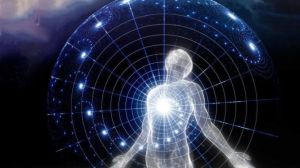
- In physical structure, a Human is a Universe-bearing Wholeness (Càn Khôn vũ trụ).
- In mission, a Human is an actor who drives transformation.
Regarding origin, “A Human is the Way (Đạo).” Regarding power, A Human is “a creation within the Creator.”
Thus, a Human is a category of philosophy used to denote the free subject existing at a supreme spiritual rank within evolution, borrowing the tangible form of a microcosmic structure to unleash a superlative power, in order to perform a mission to cooperate with the Supreme Being and assist all things.
III. The essence (Bản vị) of a human
“All things in the universe are neither superior nor inferior. Before and after, they are of the same essence—the Eternal Spirit that formed life, defined form, and allowed the heavenly beings and Buddhas to study and employ talent, thereby embellishing the Sacred Dignity.”
Essence means standard, model, or criterion. Humans are a noble essence in Heaven and Earth; or in other words, humans are an objective standard, a universal criterion to measure the value and meaning of all things as well as of humans themselves. The mind creates the essence of a human; depending on the mind’s state, the human essence reveals the value and meaning of the world. If the mind is deluded, the world appears as a sea of suffering; if the mind is enlightened, the world becomes a field of evolutionary tests. In truth, the sea of suffering or the field of evolution are just manifestations arising from each transient state of the mind’s measure; life itself does not inherently bear a particular tint:
“The nature itself does not make life illusory, but it is human desires that render life temporary.”
Therefore, the value and meaning of a human are created by the human themselves. When one deeply studies the Dharma and grasps the key in the relationship between oneself and the Supreme Being, a person can easily establish their own rank: “When humans understand the Dharma and find the key—the bridge between people and Heaven—they will practice themselves, create themselves, advance themselves, and become like deities, saints, immortals, and Buddhas with ease.”
IV. HUMAN POWER
A Human is an ultimate power in the cosmos, equal to Heaven and Earth. That power is the Creator’s power entrusted to humans to rule over the world: “Children, or generally humanity, are seed-like spiritual essences chosen to be sown into the universe, granted the power of creation, to establish dominion over the earthly realm.”
With the supreme power that God has bestowed, humans can understand the mystery of Creation and know the source of life for all things: “A human is the most spiritual being, Seizing the essence of Creation, perceiving all births.”
Because of that power, each person can do all that Buddhas, Immortals, Saints, and Gods have done to create a paradise on earth for all beings to share: “A person can do what the Buddhas, Immortals, Saints, and Gods have done; with one’s own hands, one can establish a peaceful, prosperous, and secure scene, a heaven on earth for all people to resonate with.”
That power is not ordinary authority; it is the freedom of the true mind. This freedom means not allowing the mind to be constrained or coerced by any cause.
Thus, the sovereignty of Tiểu Linh Quang (the Little Brightness) and the inherent spiritual essence are the source of power within humans.
VI. ConclusionIn general, a Human is a category of philosophy, in which each individual is a God in latent form evolving toward the sole God in the manifested form. Before coming to this life, a human is a Brightness Point (Lin h Quang) of God, subdivided by God into a free nature, endowed with a power of creation, borrowing the impermanent material to express the philosophy of the universe Càn Khôn and to serve as a vehicle for entering the world to support the public virtue in the evolution.
When stepping into and existing in this life, everyone has a sacred mission to realize the talent of Heaven and Earth to perfect what God has created. In that mission, each individual must not only evolve themselves but also cooperate with God to aid the evolution of all things.
So, where will each person go after leaving this life? The answer depends on the life of each person in the world. If one fails in their heavenly destiny, the human must undergo the cycle of birth and death in reincarnation. If one completes the mission of being human, establishes a sacred rank, attains the Dharma of self-nature, the person will evolve back to unity with God. ■
 và trình duyệt


